
Review · EL CHALTéN, ARGENTINA
Rafting experience on the Rio de las Vueltas in Patagonia
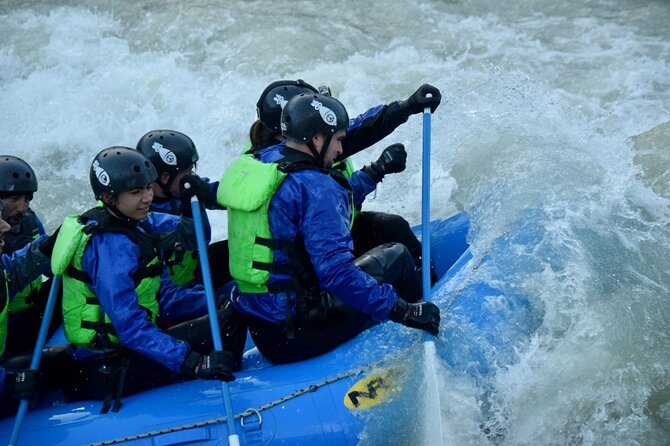
Patagonia gets wilder from the water. This three-hour rafting trip follows the glacial Río de las Vueltas from calm bends beneath Cerro Fitz Roy to a canyon run of class III and III+ rapids. I like the strong mix of scenery and action, and I like that the company supplies nearly every piece of cold-weather gear you need.
The first six kilometers are gentle enough for you to learn the paddle strokes, listen to the safety talk, and watch for guanacos and condors. Then the river changes character for 10 kilometers of faster water. The main consideration is physical: this is not a sightseeing float, and the company requires strong fitness. Several medical and age restrictions also apply.
Quick reasons to consider this trip

- Cerro Fitz Roy from the river: You get a water-level view of Fitz Roy, its satellite needles, the Andean forest, and the Patagonian steppe.
- A calm start before the rapids: Six kilometers of meandering water give first-time rafters time to practice before the action begins.
- Class III to III+ canyon rapids: The second section brings real excitement, with an initial rapid called Portage followed by roughly 10 kilometers of whitewater.
- Cold-weather equipment included: A neoprene suit, thermal shirt, jacket, life jacket, helmet, boots, mittens, and paddle are supplied.
- Wildlife can be part of the ride: Guanacos and condors have been seen along the route, adding a fine Patagonian touch to the trip.
- A small group and strong ratings: The maximum group size is 16, with 98 percent of customers recommending the experience and a 4.9 rating from 49 reviews.
From San Martín 872 to the Río de las Vueltas
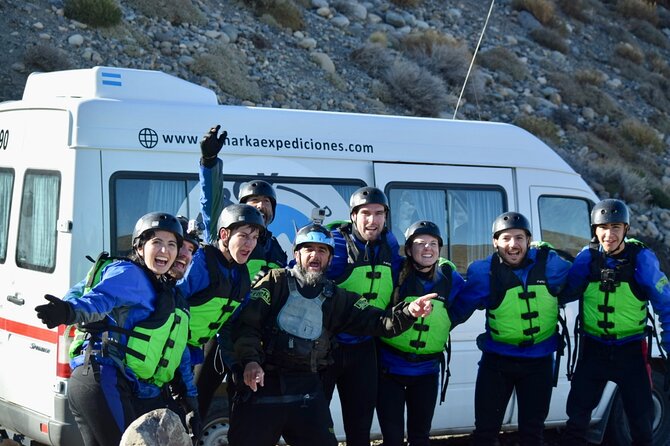
Your day begins at the Comarka Rafting dome at San Martín 872 in El Chaltén. The guides meet you there, fit you with the technical gear, and get the group ready for the short transfer to the river. The van ride takes about five minutes, so little of your paid time is spent on transport.
The equipment list is generous for a trip at this price. You receive a neoprene suit, thermal shirt, waterproof jacket, life jacket, helmet, neoprene boots, mittens, and a simple paddle. That matters in Patagonia, where cold water and wind can turn a pleasant outing into a miserable one if you are underdressed.
Once the group reaches the river access point, the guides give a technical and safety briefing. Pay close attention here. You will use the first quiet section to practice the rowing movements and safety methods, so the briefing is not empty formality. It prepares you for the faster water later.
The total activity takes about three hours, though the exact time on the river can vary with conditions. After the descent, a van brings you back to the base, where you change out of the wet gear and have a snack with tea, coffee, and mate.
More Rafting Tours in the world:
- Chiang Mai: Elephant Sanctuary, Waterfall & Bamboo Rafting
★ 4.9 · 9,160 reviews - Bali: Ubud Gorilla Face ATV and Ayung Rafting Trip with Meal
★ 4.8 · 4,765 reviews - Antalya: Ziplining, Rafting, Jeep Tour & Quad Safari w/Lunch
★ 4.6 · 3,260 reviews
Six calm kilometers beneath Fitz Roy
The opening section covers about six kilometers of calm, winding water. This is the scenic heart of the trip, and it gives you time to settle into the raft before the river demands more attention.
The Río de las Vueltas begins at Lago del Desierto and eventually flows into Lake Viedma. Its glacial origin helps explain the setting: cold water, open Patagonian country, and dramatic mountain views. From the raft, you can look toward Cerro Fitz Roy and its surrounding needles while also taking in forest and steppe.
I especially like this part for first-time rafters. You are not thrown straight into difficult rapids. Instead, you can practice paddle timing, learn how the boat responds, and get comfortable following the guide’s commands. It is also your best chance to look around, since the canyon section requires more focus.
Wildlife is another reason not to treat the calm water as a simple warm-up. Guanacos have been spotted along the route, and condors may circle above the valley. Sightings are never guaranteed, but the possibility adds meaning to the quiet stretches. Keep your eyes up between paddle instructions.
The downside is that anyone seeking nonstop whitewater may find the first section slow. That pause is useful for beginners and scenic viewing, but it takes up a substantial part of the route. The trip works best if you want both Patagonia’s scenery and a proper rafting run.
Cerro Fitz Roy and Cerro Torre as river views
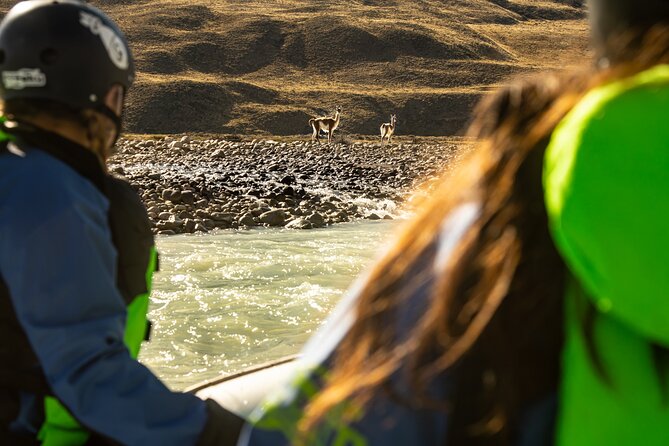
Cerro Fitz Roy is the clearest named highlight of the trip. The mountain and its satellite needles form the visual focus while you travel through the opening section. Seeing Fitz Roy from a raft gives you a different angle from the hiking paths around El Chaltén, with the river placing you low in the valley and the peaks rising above it.
Cerro Torre is also listed as part of the itinerary. The available details do not describe a separate landing or stop at the mountain, so think of it as a named scenic reference rather than a scheduled visit. The same applies to Patagonia as an itinerary highlight. You are moving through a Patagonian setting of forest, steppe, glacial water, and mountain views, not stopping at a separate attraction called Patagonia.
That distinction is useful when setting expectations. This is a river journey, not a sightseeing bus with photo stops. You may have chances to admire the named peaks, but the raft keeps moving, and the guides will also need your attention.
Portage and the canyon rapids
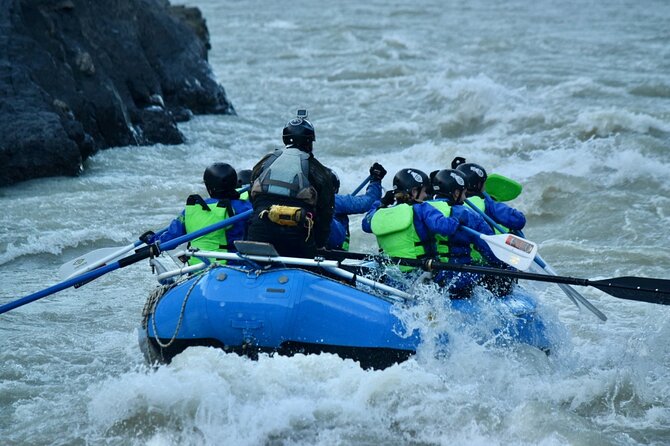
The adventure begins with the initial rapid called Portage. After that, the route enters a canyon area with a succession of class III to III+ rapids over about 10 kilometers.
Class III water generally means regular rapids with waves, maneuvering, and active commands from the guide. Class III+ adds a stronger challenge. It is not an extreme expedition, but it is serious enough that you should expect to paddle, brace, follow instructions, and get wet.
This is where the earlier practice pays off. You will already have learned the basic strokes and safety techniques in calmer water. The guides are described as skilled and professional, and a recovery team follows the raft downstream. That second layer of support is reassuring, especially if this is your first rafting experience.
The trip’s small maximum of 16 people also helps. A smaller group usually means less waiting for instructions and a more direct relationship with the guide. You still need to work as part of the raft crew, though. This is not an activity where you sit back while someone else does everything.
The best approach is to listen carefully and react promptly. The scenery remains impressive, but you will have less time to admire it once the rapids begin. Save your quiet appreciation for the flat stretches between rapids.
Same river country, a gentler way down it:
- Khao Lak: Rafting, Elephant Bathing & Sea Turtle Center Tour
★ 4.7 · 2,519 reviews - Bali: Ayung River Guided Rafting Adventure with Lunch
★ 4.7 · 2,289 reviews - Rotorua Rafting: Kaituna River White Water Rafting & Free Sauna
★ 5.0 · 1,952 reviews - Half Day Whitewater Rafting Trip
★ 5.0 · 1,840 reviews
What the guides add to the experience
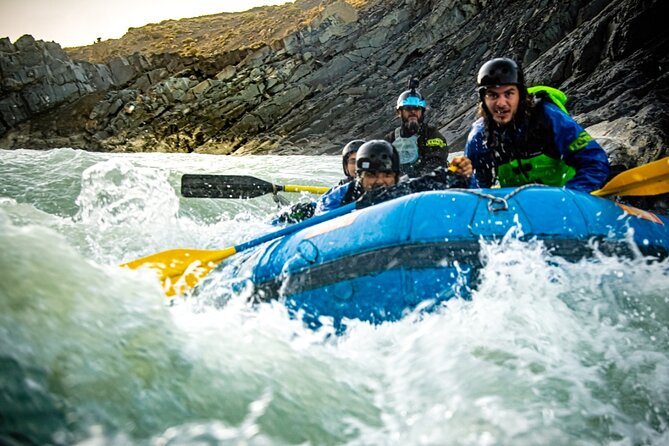
The guides are one of the strongest parts of this outing. Their job is not only to steer the raft. They explain the area, point out landmarks, answer questions about flora and fauna, and keep the mood light when the group is tense.
That friendly tone matters on a first rafting trip. Clear instructions help you act with confidence, while humor keeps the safety briefing from feeling stiff. The guides have also been praised for their professional handling of the river and for helping participants feel comfortable quickly.
Photos and videos are another welcome extra. Guides have used a GoPro during the trip and later sent the images to participants. This gives you a record of the mountain views and the action without requiring you to risk a phone or camera in the raft.
You should still treat this as a bonus, not the main reason to book. The supplied details do not promise a specific number of photos or a particular delivery method. Bring your attention to the river first, and enjoy any images provided afterward.
Is $120 a fair price?
At $120 per person, the cost is reasonable for an activity that includes technical clothing, a five-minute transfer to the river, the rafting descent, transport back to El Chaltén, and a snack with hot drinks.
The equipment is the key value point. Buying or renting a full cold-water setup would add both cost and hassle, while the included neoprene suit, boots, jacket, gloves, helmet, and life jacket make packing simpler. You also avoid arranging your own return from the end of the river section.
The experience lasts about three hours, so it is not an all-day commitment. That makes it easier to fit between hikes or other plans in El Chaltén. The tradeoff is that the price is for a focused half-day-style activity, not a full-day excursion with a long picnic or several destinations.
Round-trip transport from El Calafate is not included. If you are staying in El Chaltén, the meeting point is straightforward. If you are based in El Calafate, you must arrange your own way to the starting point, and that extra planning can change the total cost considerably.
The trip is often booked well ahead, with an average booking lead time of 47 days. That suggests you should not leave it until the last minute if rafting is important to your plans. Confirmation is provided at booking.
Who should book, and who should skip it?
This is a good match for adults and older teenagers who want a real outdoor challenge without committing to a multi-day expedition. It is especially suitable if you are new to rafting but reasonably fit, open to cold water, and willing to follow instructions closely.
You do not need to be an expert paddler. The calm opening section is designed for practice, and the guides provide the equipment and safety instruction. You do need enough strength and coordination to paddle and respond during class III and III+ rapids.
The company does not accept children under 16 or adults over 65. It also excludes people with respiratory conditions that cause disability, including COPD, asthma, and emphysema. Central or peripheral cardiovascular disease, impaired heart or vascular capacity, stents, pacemakers, other prostheses, obesity, epilepsy, and physical or mental disabilities affecting attention, walking, or coordination are also listed as reasons a person cannot participate.
These are firm safety limits, not minor footnotes. If any condition applies to you, ask the operator before booking rather than hoping it will be acceptable on the day.
The activity also requires good weather. If conditions force a cancellation, you can accept another date or receive a full refund. You can cancel for a full refund up to 24 hours before the start time, but cancellations or changes made inside that window are not refunded or accepted.
Practical advice for making the day easier
Wear clothing that can handle changing conditions before you arrive, but remember that the operator supplies the main rafting layers. Avoid bringing anything you cannot afford to lose or get wet. The available information does not specify a secure storage arrangement, so ask the base about valuables before departure.
Arrive ready to listen. The safety talk at the river access point explains the techniques you will use, and the opening calm section gives you a chance to practice them. Treat those first six kilometers as training, not dead time.
Keep your expectations balanced. The river offers mountain views, forest, steppe, and possible wildlife, but the weather can affect visibility and the activity itself. When the rapids begin, your view of Fitz Roy matters less than the next instruction.
The return to the base is simple and useful. You change out of the supplied gear, warm up with tea, coffee, mate, and a snack, then finish back at the original meeting point in El Chaltén.
Should you book the Río de las Vueltas rafting trip?
I would book it if you want a compact Patagonia adventure with real rapids, strong mountain scenery, and a clear path for beginners to learn the basics. The supplied equipment, skilled guides, recovery support, wildlife possibilities, and return transport make the $120 price easier to justify.
Skip it if you want a gentle float, have a medical condition listed in the restrictions, or cannot give rafting your full physical attention. For fit adults aged 16 to 65 who want more than another mountain viewpoint, this is one of El Chaltén’s more memorable ways to see the valley.
FAQ
Where does the rafting trip begin?
It begins at the Comarka Rafting dome at San Martín 872 in El Chaltén, Santa Cruz, Argentina.
How long does the activity last?
The experience lasts approximately three hours, including preparation, the river descent, and the return to the base.
What equipment is included?
The operator provides a neoprene suit, thermal shirt, jacket, life jacket, helmet, neoprene boots, mittens, and a simple paddle.
Is transportation included?
A five-minute van ride takes you from the base to the river entrance, and transportation back to El Chaltén is included. Round-trip transportation to El Calafate is not included.
How difficult are the rapids?
The first six kilometers are calm and meandering. After the Portage rapid, the route includes a succession of class III to III+ rapids over approximately 10 kilometers.
Can I cancel for a refund?
You can cancel at least 24 hours before the start time for a full refund. If poor weather causes the operator to cancel, you will be offered another date or a full refund.
Just added around the world
- Victoria Falls: Whitewater Rafting Experience★ 4.5 · 4 reviews
- Victoria Falls: Zambezi River White Water Rafting★ 4.8 · 5 reviews
- Valencia–Montanejos: Hiking/Raft/Kayak/Salto de la Novia★ 4.9 · 52 reviews
- Vang Vieng: Zipline, Elephant Cave, Cave Rafting,Lagoon 1★ 4.5 · 2 reviews
- Val di Sole: Noce River Rafting★ 4.1 · 3 reviews
- Valdez: Keystone Canyon Whitewater Rafting Trip★ 4.8 · 6 reviews
- Vadu Crisului: Rafting or Kayaking trip on Crisul Repede★ 4.9 · 39 reviews
- Ubud ATV &Water rafting★ 5.0 · 3 reviews