
Review · EL CHALTéN, ARGENTINA
Rio de las Vueltas Rafting Experience – El Chalten
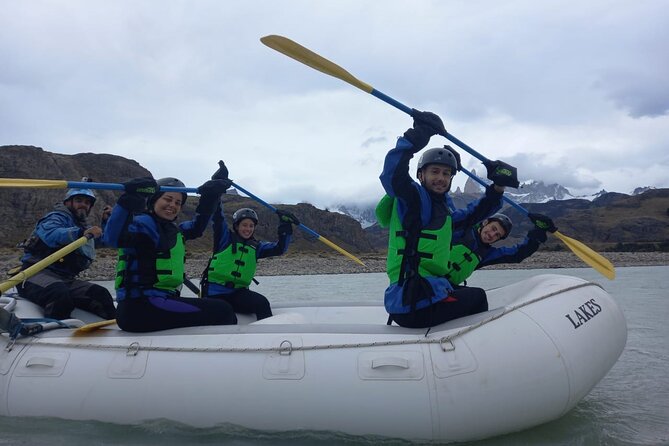
Patagonia looks different from a raft. The Rio de las Vueltas trip mixes Fitz Roy and Cerro Torre views with a lively run through a narrow canyon, giving you a fresh angle on El Chaltén beyond its famous trails. I like the careful instruction and full cold-weather kit, and I like that the launch point is only five minutes from town. The main catch is that you need strong fitness, and the river can feel very cold even when the air seems pleasant.
The Comarka Rafting crew gets repeated praise for making first-timers feel safe without taking the fun out of the rapids. Guides including Lolli, Tommy, Matteo, Lalita, and German have been singled out for clear instruction, humor, and steady encouragement. The optional photos cost extra, so ask about that before you set off if you prefer not to buy them.
Key points to know before you book
- Six calm kilometers come first: You get time to learn paddling and safety skills before the faster water begins.
- The canyon section brings Class III to III+ rapids: Expect real excitement, with conditions changing according to water levels.
- Fitz Roy and Cerro Torre frame the route: The scenery is a major part of the trip, not just background between rapids.
- Cold-weather gear is supplied: Neoprene, thermal layers, jacket, boots, gloves, helmet, and life jacket are included.
- The base is in El Chaltén: You meet at San Martín 872, then return there after the rafting and snack.
- The activity is limited to 16 people: That keeps the group small enough for close guidance and quick safety support.
Why raft the Río de las Vueltas?
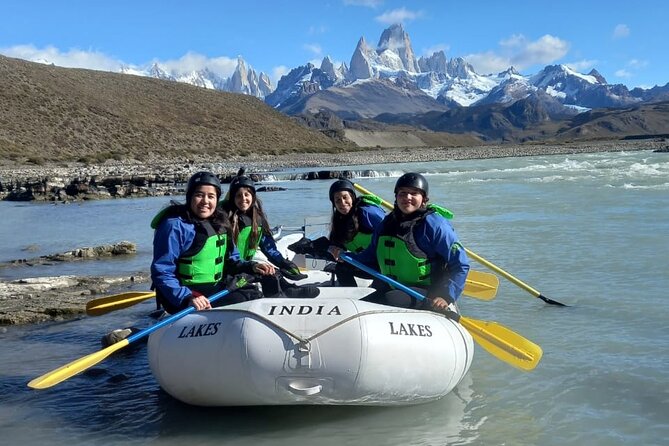
El Chaltén is built around walking. You hike toward Fitz Roy, hike toward Cerro Torre, then compare sore legs over dinner. Rafting gives you a useful change of pace while keeping those same Patagonian peaks in view.
The Río de las Vueltas begins at Lago del Desierto, fed by glacial water, and eventually flows into Lake Viedma. On this trip, you see the river shift from broad, quiet bends to a tighter canyon with faster water. That change gives the outing a natural rhythm: settle in, learn the boat, then let the river demand your attention.
I like this balance. You are not thrown straight into rapids before you know what to do, but you also do not spend three hours floating gently downstream. The quiet opening helps a first-time rafter gain confidence, while the second half gives experienced rafters enough movement to stay interested.
The scenery is especially good because you are looking up from water level. Fitz Roy and its satellite needles appear above the Andean forest and Patagonian steppe. Cerro Torre is another named highlight, although the exact visibility depends on clouds, wind, and light. On a clear day, the peaks can make the calm section feel almost like a moving viewpoint. You may also spot native animals and birds, and one outing included guanacos moving across the slopes.
More Rafting Tours in the world:
- Chiang Mai: Elephant Sanctuary, Waterfall & Bamboo Rafting
★ 4.9 · 9,160 reviews - Bali: Ubud Gorilla Face ATV and Ayung Rafting Trip with Meal
★ 4.8 · 4,765 reviews - Antalya: Ziplining, Rafting, Jeep Tour & Quad Safari w/Lunch
★ 4.6 · 3,260 reviews
What happens at the Comarka base
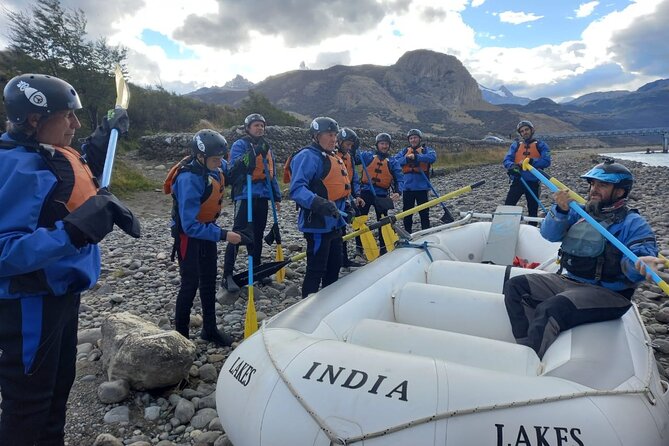
You begin at Comarka Rafting, at San Martín 872 in El Chaltén. The base is close to public transportation and serves as the practical center of the outing. You leave your ordinary clothes and belongings there while the staff fits you with technical equipment.
The supplied kit includes a neoprene suit, thermal shirt, jacket, life jacket, helmet, neoprene boots, mittens, and a simple paddle. Several people specifically appreciated receiving enough clothing to handle rain, wind, and cold. That matters in El Chaltén, where a gray morning can become a wet and windy afternoon with little warning.
Bring a swimsuit or spare underwear to wear under the supplied layers, and pack dry underwear for afterward. One family found wool socks useful inside the neoprene boots during a particularly cold, snowy outing. You should also expect to get wet. The equipment keeps you warmer and safer, but it does not turn whitewater rafting into a dry activity.
After changing, you ride in a van for roughly five minutes to the river entrance. This short transfer is a real convenience. You do not lose an hour getting out of town, and the rafting begins almost as soon as the safety talk is finished.
The first six kilometers, Fitz Roy from the water
The opening section covers about six kilometers of calm, winding river. This is where the guides explain how to hold the paddle, respond to commands, balance in the raft, and handle basic safety procedures.
If you have never rafted before, this calm water is valuable. You can practice without the pressure of a rapid coming at you. The guides also use this portion to help the group find a common rhythm. Several first-timers found the instruction reassuring, while experienced rafters appreciated that the crew still kept the briefing clear and practical.
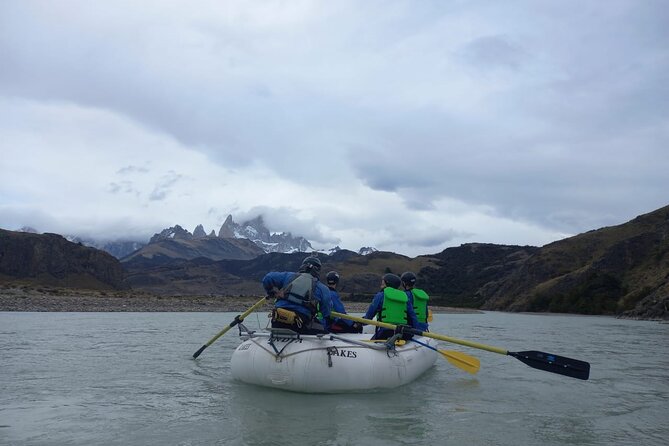
This is also the best part for looking around. The river passes through Andean forest and open steppe, with Fitz Roy and its satellite peaks visible when conditions allow. Cerro Torre is another planned point of interest. The exact views are never guaranteed in Patagonia, but the route gives you repeated chances to look toward the mountains rather than only at the water ahead.
The calm section can feel long if you booked purely for adrenaline. That is the tradeoff. You get scenery, practice, and a gentler start, but the trip does not begin with nonstop rapids. I think that works well for a mixed group, especially when some people are new to rafting.
The canyon and Class III to III+ rapids
The character of the trip changes after the initial rapid called Portage. From there, the route enters a canyon area with roughly 10 kilometers of Class III to III+ rapids.
Class III water generally means active rapids, waves, and the need to follow commands closely. Class III+ adds more force and complexity. You are not signing up for a casual float, but the trip is designed for beginners as well as people with prior rafting experience. The crew provides instruction before the action begins and keeps safety at the center of the run.
Conditions can change. One experienced group found the river running at about Class III, with one section at a higher grade not run. Another group described a mix reaching Class III or IV during low water, with the rapids smaller but still exciting. These reports point to the practical truth: the exact feel of the trip depends on water level and weather, not just the printed class rating.
A safety kayaker may accompany the raft, which adds another layer of support. If someone falls into the water, the guides are prepared to retrieve them quickly, but rafting still carries real physical demands. You need to brace yourself, paddle when instructed, and stay alert through the faster sections.
The canyon scenery gives the rapid run its sense of place. You move from the wider valley into tighter rock walls, with tall peaks and slopes above you. The river keeps your attention, then offers short windows to look up and take in the gorge. That combination is the heart of this outing.
Same river country, a gentler way down it:
- Khao Lak: Rafting, Elephant Bathing & Sea Turtle Center Tour
★ 4.7 · 2,519 reviews - Bali: Ayung River Guided Rafting Adventure with Lunch
★ 4.7 · 2,289 reviews - Rotorua Rafting: Kaituna River White Water Rafting & Free Sauna
★ 5.0 · 1,952 reviews - Half Day Whitewater Rafting Trip
★ 5.0 · 1,840 reviews
Guides who make the difference
The crew receives unusually strong praise for warmth and professionalism. Lolli, also referred to as Lolito or Lolli, is frequently identified as the lead guide. Tommy and Matteo are mentioned as raft guides and support crew, while Lalita and German have also received praise for instruction and bilingual communication.
Names and roles may vary by departure, but the important point is the guide style. Instructions are provided in English and Spanish, useful for mixed groups. The crew explains what to do before the rapids, encourages hesitant paddlers, and keeps the mood light without treating safety as a joke.
That matters most when the weather turns sour. Groups have gone out in rain, strong wind, snow, and overcast skies, yet still found the guides attentive and organized. The supplied layers make those conditions manageable, though cold hands and feet remain possible late in the season.
I would not book this expecting complete control over the weather. The trip requires suitable conditions, and the operator can cancel for poor weather, offering another date or a full refund. Still, you should not automatically cancel because the sky is gray. The equipment is made for the setting, and some of the most enjoyable outings have taken place on chilly days.
What is included, and what is not
The roughly three-hour outing includes the rafting equipment, the van ride back to the base, and a snack with tea, coffee, mate, and something to eat after the descent. The hot drinks are more than a nice extra after cold water. They give you a chance to warm up and recover before changing back into your dry clothes.
Transportation is included from the river back to El Chaltén. The meeting point and end point are both at the Comarka base, which keeps the arrangement simple. Some groups have also received a ride to their accommodation after changing, but that was an unexpected courtesy, not a stated part of the package. Do not plan around it.
Round-trip transportation from El Calafate is not included. If you are staying there, you need to arrange your own way to El Chaltén. That can affect the real cost and time commitment, so include it when comparing this outing with activities based in El Calafate.
Photos are optional and cost extra. One person felt the additional charge of 20,000 pesos, about $16 at the time, made the experience less pleasant because the option was not clear enough. Ask about the photo service before departure. You can then decide in advance and keep your attention on the river.
Is $120 a fair price?
At about $120 per person, this is not a cheap add-on. I think the price is reasonable if you value a fully equipped activity with trained guides, transport from the river, a small maximum group of 16, and a post-rafting snack.
The gear is important here. You are not simply renting a paddle and hoping your hiking clothes will survive glacial water. The package covers a neoprene suit, thermal layer, jacket, boots, mittens, helmet, life jacket, and paddle. Replacing that equipment yourself would be awkward and expensive, especially if rafting is only one part of your Patagonia trip.
The value also depends on how you use your time in El Chaltén. If you have several hiking days planned, rafting gives your body a different kind of work and lets you see the Fitz Roy area from below. If your budget is tight and your main goal is mountain walking, the same $120 might buy meals, local transport, or another day of trail supplies.
The average booking time is about 38 days ahead. That suggests you should reserve before arriving if your dates are fixed, especially during the busy season. A group limit of 16 helps the experience feel organized, but it also means last-minute spaces may be limited.
Who should book this rafting trip?
This outing suits you if you want real adventure but do not have advanced rafting experience. The calm first section gives beginners time to learn, while the canyon provides enough action for experienced rafters to enjoy. It also works well for families with older teenagers, couples, and friends looking for a break from hiking.
You need strong physical fitness. The activity is not suitable for anyone with respiratory conditions such as asthma, COPD, or emphysema, cardiovascular disease, epilepsy, obesity, or a condition affecting attention, walking, or coordination. People with pacemakers, stents, or other cardiovascular prostheses cannot participate.
The stated age range is 16 to 60. These restrictions are firm practical warnings, not minor fine print. If you have a medical concern, check before booking rather than hoping the river will be easy on the day.
You should also be comfortable with cold water, changing weather, and the possibility of falling into the river. You do not need previous rafting experience, but you do need to listen, paddle, and stay engaged.
Booking, cancellation, and practical planning
You can cancel at least 24 hours before the start time for a full refund. Changes or cancellations made inside that window are not accepted for a refund. The local start time controls the deadline.
The operator may cancel if weather conditions are poor. In that case, you are offered another date or a full refund. Since weather is part of Patagonia’s personality, leave some flexibility in your schedule if you can.
Plan to arrive ready for a gear fitting, but wear clothes that are easy to change out of. Bring a swimsuit or spare underwear for underneath the rafting layers, dry underwear for afterward, and extra warmth for your feet if you are going late in the season. Keep your expectations realistic about photos, and ask about the optional charge before you leave the base.
Should you book the Río de las Vueltas rafting experience?
I would book it if you want a well-supported outdoor activity that combines mountain views with genuine whitewater. The strongest reasons are the gradual introduction, the skilled Comarka crew, the supplied cold-weather equipment, and the shift from calm river bends to a canyon full of Class III and III+ rapids.
I would skip it if you have a relevant medical condition, weak fitness, a strict dislike of cold water, or no room in your budget for a $120 activity. You should also avoid placing it immediately before an important departure, since weather can affect the schedule.
For most fit visitors aged 16 to 60, this is one of the best ways to break up a hiking-heavy stay in El Chaltén. Pack dry clothes, listen to Lolli and the crew, and let the river show you Fitz Roy from a completely different angle.
FAQ
Where does the Río de las Vueltas rafting trip begin?
It begins at Comarka Rafting, San Martín 872, in El Chaltén, Santa Cruz, Argentina.
How long does the rafting experience last?
The experience lasts about three hours, including preparation, rafting, the return to the base, and time to change and have a snack.
How far is the river launch point from the base?
The launch area is about five minutes from the Comarka base by van.
What difficulty are the rapids?
After the calm opening section and the Portage rapid, the route includes a succession of Class III to III+ rapids over about 10 kilometers. Exact conditions can vary with water levels.
Is rafting equipment included?
Yes. The equipment includes a neoprene suit, thermal shirt, jacket, life jacket, helmet, neoprene boots, mittens, and a simple paddle.
Is transportation from El Calafate included?
No. Round-trip transportation to El Calafate is not included. Transportation back to El Chaltén after the river descent is included.
Can I cancel for a full refund?
Yes, if you cancel at least 24 hours before the experience start time. If poor weather causes the operator to cancel, you are offered another date or a full refund.
Just added around the world
- Trekking One Day+Bamboo Rafting+Jungle waterfall★ 5.0 · 2 reviews
- River Tara Long Rafting Tour★ 3.5 · 3 reviews
- Rafting in Interlaken from Zurich★ 4.0 · 2 reviews
- Yogyakarta Rafting tour for Family II-III or Professional V+★ 4.5 · 2 reviews
- Whitewater Sports rafting on the Yarra river★ 4.5 · 5 reviews
- Yarra River Half-Day Rafting Experience★ 5.0 · 21 reviews
- New River Gorge Whitewater Rafting, WV – Lower New Full Day★ 5.0 · 18 reviews
- Canyoning and Rafting Tours from Antalya★ 4.5 · 2 reviews