
Review · UGANDA
Uganda Jungle Rafting
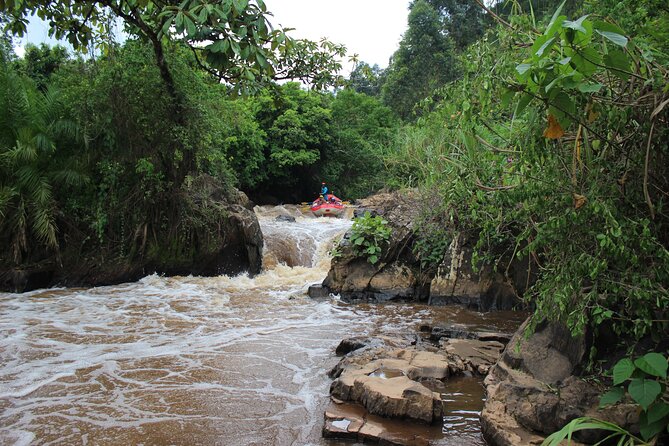
The jungle gets wilder after the road ends. Uganda Jungle Rafting takes you onto the Birira River near Rukungiri, where about 25 kilometers of near-continuous class II to IV+ rapids cut through thick West Ugandan jungle. I like the steady action and the chance to fit this unusual outing between Bwindi, Queen Elizabeth National Park, or other western Uganda stops. The price also covers safety gear, guides, lunch, photos, a snack, and a drink at the end.
The main consideration is the intensity. This is not a gentle float with a few splashes. You will spend roughly four hours on moving water, and the higher-grade rapids require attention and comfort with adventure. Families can join on a calmer stretch, but the minimum age is 10, and the full trip may not suit anyone looking for a relaxed sightseeing morning. Sadat and the team are praised for safety, warmth, and good organization, which helps make the outing feel exciting rather than reckless.
Key points to know before you go
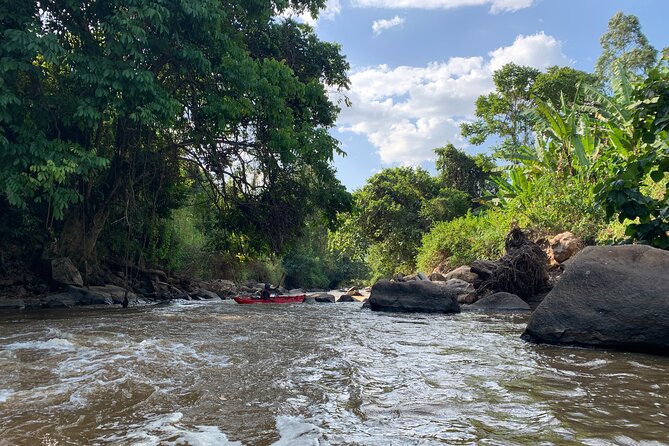
- Four hours on the Birira River: You cover about 25 kilometers of fast water, with rapids appearing one after another.
- A jungle setting far from the usual Nile route: The river runs through West Uganda, near the main attractions around Bwindi and Queen Elizabeth National Park.
- About six hours from start to finish: Allow 45 minutes each way between Rukungiri and the river, plus a safety briefing and lunch break.
- A full package at $150: Safety gear, photos, lunch, a snack, and a finishing drink are included.
- Ages 10 and up: Families may use a calmer river section, while the standard trip includes class II to IV+ rapids.
- A small operation with a 20-person limit: The team has international rafting experience and safety certificates, with Sadat often singled out for personal care.
Why the Birira River feels different
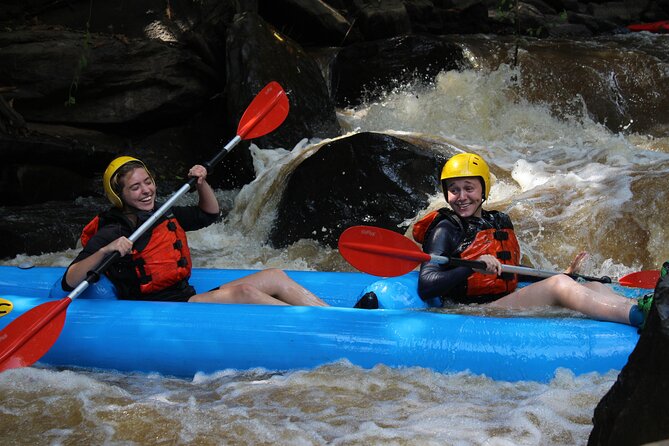
Most visitors first hear about Ugandan rafting in connection with the Nile. The Birira offers a very different day. Instead of wide open river views and a few major rapids spaced between calmer sections, this route keeps you close to thick tropical growth and places the rapids close together.
That makes the setting part of the appeal. You are not simply being carried downstream while waiting for the next activity. The water keeps you busy, and the jungle stays close around the raft. Tropical birds and other wildlife add interest, although this is not a dedicated wildlife safari. You should come for the river first, with the natural setting as a bonus.
I especially like the location for a western Uganda itinerary. If you are heading between Rukungiri, Bwindi, Queen Elizabeth National Park, crater lakes, or chimp trekking areas, this can add a very different kind of day without sending you all the way to Jinja. It gives you something active between long drives and animal-focused excursions.
The route is also described as a local operation with a strong connection to the area. A short surprise stop prepared by the community beside the river is included. Details of that stop are kept as a surprise, so you should not expect a formal cultural performance or a fixed museum-style visit. The value is in the local touch and the break from a standard commercial rafting schedule.
More Rafting Tours in the world:
- Chiang Mai: Elephant Sanctuary, Waterfall & Bamboo Rafting
★ 4.9 · 9,160 reviews - Bali: Ubud Gorilla Face ATV and Ayung Rafting Trip with Meal
★ 4.8 · 4,765 reviews - Antalya: Ziplining, Rafting, Jeep Tour & Quad Safari w/Lunch
★ 4.6 · 3,260 reviews
Starting in Rukungiri at 9:00 a.m.
The day begins in Rukungiri town at 9:00 a.m. The stated meeting point is 6W5F+GXR, Rukungiri, Uganda, and the activity returns to this same point at the end.
That return point matters. You can use the outing as a break while moving through western Uganda, then continue to your next destination after the experience. You can also stay in Rukungiri for the finishing drink and celebration before carrying on.
From town, the drive to the river takes about 45 minutes. The ride is not part of the rafting itself, but it helps explain why the advertised six hours includes more than time on the water. You should plan for the full morning and afternoon rather than treating this as a quick two-hour excursion.
Public transport is nearby, according to the activity details. Even so, the clearest plan is to reach the stated meeting point on time, since the river departure follows the group transfer and safety briefing.
A safety briefing before the first rapid
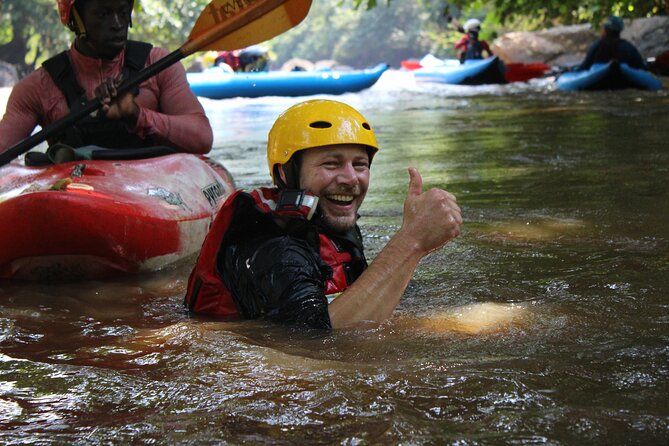
Before you enter the water, the guides provide about 20 minutes of safety instruction. This is important here because the trip includes class II, III, IV, and IV+ sections rather than one consistent level of difficulty.
The team is described as professional, friendly, and trained through international rafting experience and certificates. Safety equipment is included, so you do not need to arrange a separate helmet or other basic rafting gear for the activity.
The strongest praise centers on the way the guides combine safety with fun. That balance matters on a river with almost continuous rapids. You want clear instructions, but you also want guides who keep the mood light when the raft is moving fast. Sadat is named in the feedback as a caring and attentive member of the team.
You should still be honest with yourself before booking. A guide can manage a river professionally, but no guide can turn a serious rapid into a calm float. If you dislike physical activity, fast water, or getting thoroughly wet, this probably is not the right choice. If you enjoy active outdoor outings and can follow instructions, the safety briefing gives you a useful start.
Four hours of rafting and kayaking
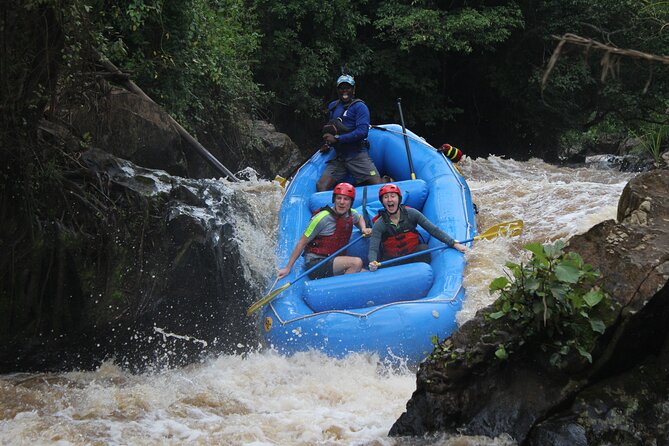
Once on the Birira, you spend about four hours covering 25 kilometers. The description presents the route as rafting and kayaking through the jungle, so you should expect an active water experience rather than a passive ride.
The key word is continuous. The rapids are close together, which creates the main difference between this trip and a river outing with long quiet stretches. You get repeated bursts of action, followed by short chances to take in the birds, trees, and river corridor before the next rapid arrives.
Class II to IV+ covers a wide range. The lower grades can offer lively movement without being the most technical part of a river trip. Class IV and IV+ sections are more demanding, and they explain why the safety talk, proper equipment, and trained guides matter. The details do not promise that every person will tackle every section in the same way, so ask the team about the calmer family route if you are booking for children or mixed abilities.
The scenery is one of the strongest reasons to choose Birira. The river moves through thick jungle rather than an open recreational zone. That gives the outing a sense of discovery, but it also means the focus stays on the water. Do not expect a scheduled list of wildlife sightings. You might see tropical birds and other wildlife, but the river action remains the center of the day.
The activity is limited to a maximum of 20 people. That is large enough for a lively group, but smaller than a mass-market outing with several full rafts. The exact feel will depend on the number booked that day. A small group can make instructions and personal attention easier, while a full group may feel more social and energetic.
Same river country, a gentler way down it:
- Khao Lak: Rafting, Elephant Bathing & Sea Turtle Center Tour
★ 4.7 · 2,519 reviews - Bali: Ayung River Guided Rafting Adventure with Lunch
★ 4.7 · 2,289 reviews - Rotorua Rafting: Kaituna River White Water Rafting & Free Sauna
★ 5.0 · 1,952 reviews - Half Day Whitewater Rafting Trip
★ 5.0 · 1,840 reviews
Lunch on the river, then a local surprise
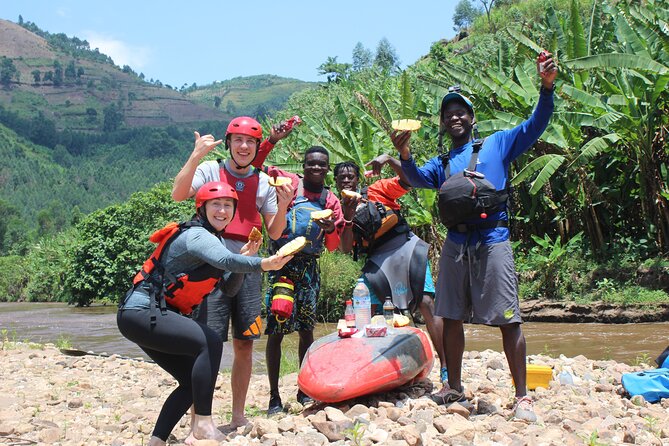
A 20 to 30-minute lunch break takes place on the water. This is a useful pause after several hours of rapids, and lunch is included in the $150 price.
The food has received unusual praise, which is worth noting because meals on active day trips are often an afterthought. The team also includes a snack and a drink at the end. The finishing drink has been described as local gin by people who took the trip, but you should treat that as a possible part of the experience rather than a promise of a particular beverage.
The community-prepared surprise stop adds another layer to the break. Since the details are intentionally not given, I would keep expectations open. The point is not a long extra excursion. It is a short, locally prepared moment beside the river that makes the day feel connected to the area rather than built only around adrenaline.
Lunch on the water also means you should not expect a restaurant meal or a long indoor rest. This is still an outdoor trip. If you need specific dietary arrangements, ask the operator before booking, since the available information does not list menu choices.
What the $150 price includes
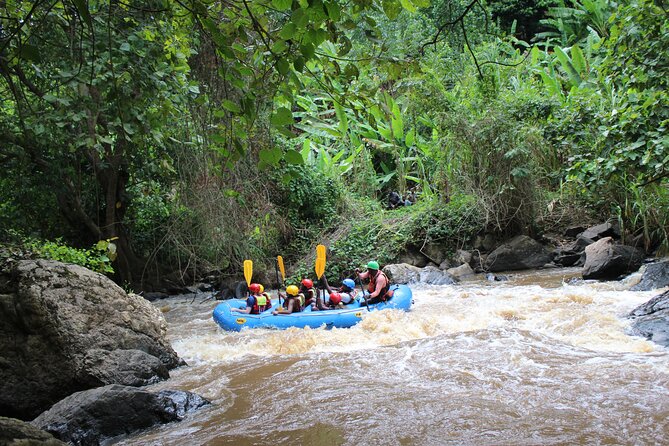
At $150 per person, this is not a budget river float. It is also more than the bare cost of a raft seat. The package includes safety gear, the river experience, lunch, a snack, a drink at the end, and all photos taken during the activity.
The photography inclusion can make a real difference. Rafting is one of those outings where carrying your own camera may be awkward or risky, especially during rapids. Having the team handle photos lets you focus on paddling and listening to instructions. The activity does not specify how or when the photos are delivered, so ask for those details if they matter to you.
The price also covers the structure of a full day: transport between Rukungiri and the river, the safety briefing, several hours on the water, the lunch break, and the return to town. Based on the information provided, that is a fair value for someone who wants a complete, guided experience rather than a simple equipment rental.
The value is strongest if you were already planning a western Uganda route. You can combine the rafting with gorilla trekking, safari parks, crater lakes, or chimpanzee trekking. If you must make a long detour solely for this activity, the time and transport calculation becomes more important.
Who should book this adventure
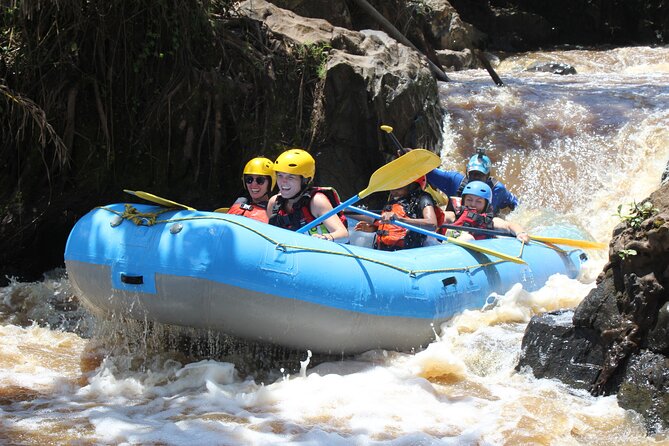
I would recommend this trip to active visitors who want a break from vehicle safaris and forest walks. It suits someone who enjoys physical outings, accepts wet clothes and repeated rapids, and wants a less familiar side of Uganda.
It also works well for an itinerary between Bwindi and Queen Elizabeth National Park. One person who had lived in Uganda for years described the outing as a fresh way to see the country, which says something about how different the Birira feels from the more established Nile rafting route.
Families can take part, but you should be clear about the route. The operator accepts participants from age 10 and offers a calmer river section for families. That does not mean every child will enjoy it, so consider age, confidence, and comfort with water before booking.
This is less suitable for anyone who wants a quiet nature cruise, a gentle introduction to rafting, or a flexible start time. The departure is set for 9:00 a.m., and the day is built around a fixed transfer and river schedule.
The maximum group size is 20, and the operator uses a mobile ticket. Confirmation is normally received at booking, though reservations made within two days of the trip may take up to 48 hours and remain subject to availability. The booking is non-refundable and cannot be changed, so only reserve once your Uganda route is firm.
My verdict on Uganda Jungle Rafting
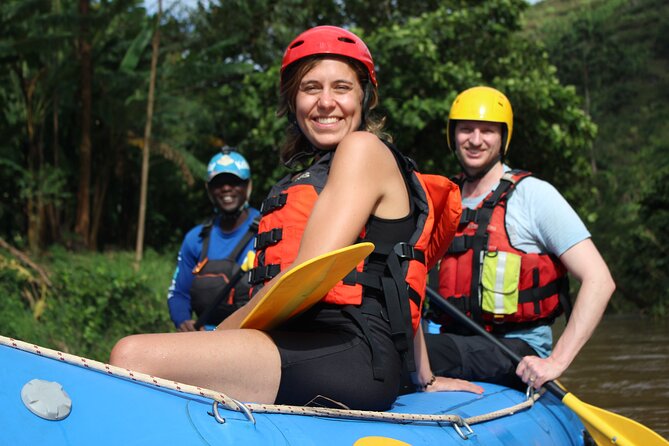
You should book this if you want a high-energy day in western Uganda and are comfortable with the fact that the Birira keeps moving. The best reasons are the jungle setting, the long stretch of close-set rapids, and the care built into the package through trained guides, safety gear, food, photos, and a community touch.
I would skip it if you are looking for a mild float or if your schedule cannot spare roughly six hours from Rukungiri. For the right person, though, this is a memorable contrast to gorilla trekking and safari drives. It is active, local, and unusually well placed for a western Uganda route. The strong 5-star rating from eight submitted ratings fits the experience described: a small, energetic operation that takes both safety and enjoyment seriously.
FAQ
Where does Uganda Jungle Rafting begin?
It begins in Rukungiri town at the meeting point listed as 6W5F+GXR, Rukungiri, Uganda.
What time does the activity start?
The scheduled start time is 9:00 a.m.
How long does the full experience take?
The full experience takes about six hours. This includes the drives to and from the river, the safety briefing, the river trip, and the lunch break.
How long are you on the water?
You spend about four hours on the water.
How far do you raft?
The route covers about 25 kilometers on the Birira River.
What difficulty are the rapids?
The route includes class II through class IV+ rapids.
Is lunch included?
Yes. Lunch and a 20 to 30-minute lunch break on the water are included. A snack and a drink at the end are also provided.
Is rafting equipment included?
Yes. Safety gear is included in the price, and the guides provide a safety briefing before you enter the river.
Can children join the activity?
The minimum age is 10. Families can take a calmer section of the river, which is described as just as scenic.
Where does the activity finish?
It finishes back at the original meeting point in Rukungiri.
Just added around the world
- Trekking One Day+Bamboo Rafting+Jungle waterfall★ 5.0 · 2 reviews
- Yogyakarta Rafting tour for Family II-III or Professional V+★ 4.5 · 2 reviews
- River Tara Long Rafting Tour★ 3.5 · 3 reviews
- Rafting in Interlaken from Zurich★ 4.0 · 2 reviews
- Whitewater Sports rafting on the Yarra river★ 4.5 · 5 reviews
- Yarra River Half-Day Rafting Experience★ 5.0 · 21 reviews
- Canyoning and Rafting Tours from Antalya★ 4.5 · 2 reviews
- Full-day Tour: Cycling, Rafting & SanjieLiu Outdoor Water Theatre★ 5.0 · 3 reviews