
Review · NEPAL RAFTING TOURS
Trishuli Rafting
Nepal’s easiest river escape packs real excitement. Trishuli rafting gives you a practical way to trade Kathmandu’s traffic for rushing water, rocky gorges, and broad views along one of Nepal’s best-known rafting rivers. The route is also useful if you are moving between Kathmandu, Pokhara, or Chitwan National Park, with the river journey leading toward the Manakamana Cable Car point.
I like the small group size, limited to eight people, and I like that private car transport, lunch, rafting equipment, and one night in Trishuli are included. The main point to consider is the price: at $300 per person, this is not a cheap half-day outing, so you should confirm exactly how the eight-hour schedule fits with the included overnight stay before booking.
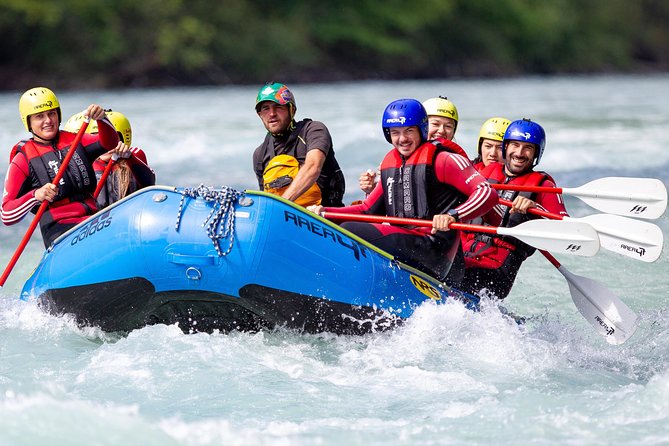
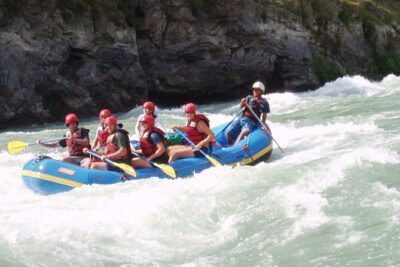
The rafting itself is the star. You can expect turbulent sections, rapids, gorges, and time in the river under the direction of a rafting guide. The strongest praise goes to the guides and organizers, with Dev handling arrangements and Dave and Bishal singled out for their energy and care on the river. Bring breathable tops that cover your shoulders, and leave valuables behind.
Five useful things to know before you go
- The river is within easy reach of Kathmandu: The rafting area is about 60 kilometers from Kathmandu Valley, making it one of the simplest white-water options near the capital.
- The route includes a famous transport landmark: The river journey leads toward the Manakamana Cable Car point, adding a distinctive Nepal connection to the rafting day.
- You travel in a private car: Pickup and return transport are included, which saves you from arranging a separate road transfer.
- The group is capped at eight: A smaller boat group can make instructions easier to hear and keeps the outing more personal.
- You need moderate fitness: The activity involves paddling and handling yourself in moving water, so confidence in a raft and with a paddle matters.
Why Trishuli works so well from Kathmandu
Nepal offers more demanding river trips, but Trishuli is popular for a simple reason: it fits neatly into a wider trip. The river is accessible from Kathmandu, Pokhara, and Chitwan National Park, so you do not need to build your whole holiday around it.
That practical location changes the value of the experience. You can add white water to a Nepal trip without committing to a remote expedition or a long transfer into the mountains. For many people, this is the right balance: enough rapids and river action to feel exciting, but a route that connects with major places already on a Nepal schedule.
The approach from Kathmandu begins at Travel Pinto in Kathmandu 44600, with a stated start time of 9:15 am. Pickup and drop-off by private car are included. That matters in Nepal, where arranging road transport separately can create extra cost, delays, and uncertainty.
The road journey is part of the day, not just a way to reach the river. You leave the capital’s dense urban setting and head toward a more open river corridor. The exact drive time is not provided, so I would avoid planning a tightly timed flight, hotel check-in, or other appointment around the listed eight-hour duration.
More Rafting Tours in Nepal:
- Upper Seti: Half-Day White Water Adventure
★ 5.0 · 87 reviews - Pokhara: Half Day Upper Seti Rafting & Paragliding adventure
★ 4.8 · 34 reviews - Himalayan White Water Rafting Day Trip from Kathmandu
★ 4.0 · 22 reviews
What the eight-hour rafting day feels like
The advertised activity lasts about eight hours. You begin at the Kathmandu meeting point, travel by private car, prepare for the river, and spend the central part of the outing rafting on the Trishuli.
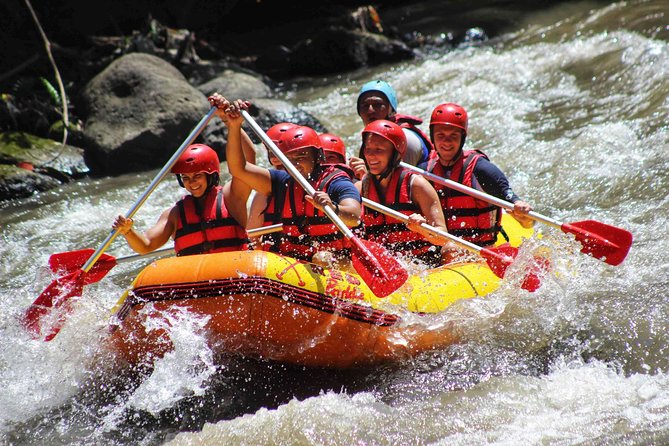
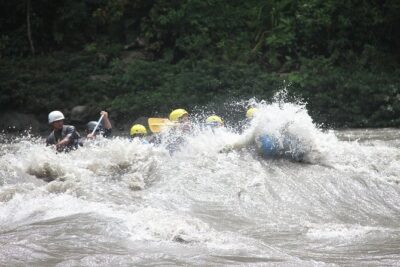
The river offers a mix of flowing water, rapids, turbulent sections, and gorges. That mix is important. You are not simply sitting in an inflatable boat and admiring the view. You will need to listen, paddle, and respond to the guide as the raft moves through changing water.
I like that the description focuses on both action and scenery. The rapids provide the physical challenge, while the rocky river corridor gives the route its character. You get a taste of Nepal beyond temples, traffic, and mountain viewpoints, with the river providing a close-up experience of the country’s natural setting.
The trip also brings you toward the Manakamana Cable Car point. This is a useful reference point for understanding the route. Manakamana is one of Nepal’s best-known pilgrimage and transport destinations, and the cable car point gives the rafting trip a clear sense of place rather than making it feel like an isolated activity park.
Do not expect every section of the river to be equally wild. A rafting route naturally includes calmer stretches between rapids, and those quieter parts can be welcome. They give you time to look around, recover your grip, and enjoy the scenery without concentrating on every movement of the raft.
Swimming is also part of the appeal for some people. One account describes enjoying a moment of swimming in the Trishuli, but you should only enter the water when the guide says it is suitable and safe. The river is moving water, not a hotel pool, and conditions can change.
The guides matter more than the gear
The supplied experience includes a life jacket and white-water rafting, but equipment alone does not make a river trip work. The guide’s instructions and judgment are central to the day.
Dev is associated with arranging the experience, while Dave and Bishal receive specific praise for being energetic and memorable on the river. That is useful information because good communication can make a major difference when you are dealing with rapids for the first time.
You should expect to paddle as directed and stay alert. The description calls for moderate physical fitness, and one account gives especially practical advice: be confident handling a paddle and sitting in a rafting boat. That does not mean you need to be an athlete, but you should be comfortable with exertion and moving water.
Cover your shoulders with breathable clothing when the sun is strong. You will want clothes that can handle water and dry reasonably well. The advice to avoid taking valuables is worth following closely. Phones, jewelry, wallets, and cameras are easy to lose around a raft, and photos and videos are not included in the price.
If you want photographs, ask about the arrangement before departure. The supplied details specifically exclude photos and videos, so you should not assume that a photographer or camera service will be available.
Lunch and the overnight stay
Lunch is included, which makes the day simpler. You do not need to organize a separate meal while the rafting schedule is underway, though the exact menu and dining location are not specified.
One night in Trishuli is also included. This is where the package needs a little clarification. The main description presents the activity as roughly eight hours, yet the inclusions name an overnight stay, and one account describes a two-day Trishuli adventure with a river beach complex. Those details suggest that the overnight element may be part of a longer arrangement or a particular version of the trip.
Before paying, ask for the exact schedule. Confirm whether your $300 booking includes a full night after rafting, where you will stay, and how the return to Kathmandu fits into the plan. This is not a complaint about the stay. It is simply an important question because the stated duration and overnight inclusion do not appear perfectly aligned.
The river beach accommodation can add a pleasant change of pace after the active part of the trip. After paddling, a place near the river gives you time to slow down and enjoy the setting. Still, the accommodation standard, room type, meals beyond lunch, and check-in details are not specified, so you should not assume a resort-style stay.
Same river country, a gentler way down it:
- 1 Night 2 Days Trishuli River Rafting Trip From Kathmandu With Private Car
★ 5.0 · 14 reviews - Pokhara: Upper Seti River Rafting Day Tour
★ 4.9 · 11 reviews - Pokhara: Seti River Rafting Adventure with Hotel Pickup
★ 5.0 · 5 reviews - Rafting Tour In Trishuli river
★ 4.0 · 5 reviews
Is $300 per person fair?
At $300 per person, the value depends heavily on how you use the overnight component. For a straightforward eight-hour rafting outing, the price is high compared with a basic day activity. For a package that includes private car transport, rafting, safety equipment, lunch, and a genuine night in Trishuli, the calculation looks more reasonable.
Private transport is a real benefit. You are not paying only for time on the river. You are also paying for door-to-door coordination from the Kathmandu meeting point and a return to that same point, plus the convenience of a small group capped at eight.
Group discounts may improve the deal if you are booking with family or friends. Ask how many people are needed to qualify and whether the discount applies to the entire package. Since the maximum group size is eight, this is better suited to a small party than a large coach group.
I would compare the cost with the value of your time. If you are already traveling between Kathmandu and another major Nepal destination, the river trip may function as both an activity and a change of location. If you only want a few hours of rafting and have no interest in staying in Trishuli, the price may feel harder to justify.
Who should book this river trip?
This experience suits you if you want genuine white-water action without traveling far from Kathmandu. It also works well if you are building a route between Kathmandu, Pokhara, and Chitwan and want an active stop along the way.
You should have moderate fitness and be willing to paddle. You do not need to arrive as an expert, but confidence in a raft is useful. If you dislike getting wet, working with a group, or following quick instructions, this may not be your best Nepal activity.
The small maximum group is a good fit for couples, friends, and families with older children who meet the activity’s fitness needs. It was also praised as a honeymoon highlight, which makes sense if you and your partner want something more active than sightseeing.
This is not the right choice if your priority is complete schedule certainty. The weather can affect the departure, and the minimum number of participants must be met. Also, the unclear relationship between the eight-hour duration and one-night stay means you should ask questions before booking.
Practical preparation for the river
Start at Travel Pinto in Kathmandu 44600 at 9:15 am. The activity ends back at the meeting point according to the supplied details, and pickup and drop-off by private car are included.
Wear practical clothes that can get wet. Breathable tops that cover your shoulders are a smart choice in strong sun. Bring only what you need, and keep valuables out of the boat.
Your life jacket is included, as is lunch. Insurance is not included, and personal expenses are extra. Anything not specifically listed as included should be treated as your responsibility, including photos and videos.
The activity is non-refundable and cannot be changed for personal reasons after booking. If poor weather forces cancellation, you should be offered another date or a full refund. If the minimum number is not reached, the options are another date, another experience, or a full refund.
My final take on Trishuli rafting
I would book this if you want an accessible Nepal rafting experience with private transport, a small group, lunch, and a possible overnight by the river. The rapids, gorges, swimming opportunity, and route toward Manakamana give the day more character than a short amusement-style rafting session.
I would not book without first confirming the schedule for the night in Trishuli. At $300, the overnight stay needs to be a real part of the value, not an unclear extra attached to an eight-hour description. If that detail is confirmed, this is a strong choice for active couples, small groups, and anyone who wants to add river time to a Kathmandu-based trip.
FAQ
Where does the Trishuli rafting experience start?
It starts at Travel Pinto, Kathmandu 44600, Nepal.
What time does the activity start?
The stated start time is 9:15 am.
How long does the activity last?
The activity is listed as approximately eight hours.
How many people can join?
The maximum group size is eight people.
What is included in the price?
The price includes private car pickup and drop-off, white-water rafting, a life jacket, lunch, and one night in Trishuli.
Are insurance, personal expenses, and photos included?
No. Insurance, personal expenses, photos, and videos are not included. Items not specifically listed as included are also excluded.
What happens if weather or group numbers cancel the trip?
If poor weather causes cancellation, you are offered another date or a full refund. If the minimum number of participants is not reached, you are offered another date, another experience, or a full refund.
Just added around Nepal
- Paragliding Trip with River Rafting★ 5.0 · 2 reviews
- 1 Day Rafting Upper Seti River★ 4.5 · 2 reviews
- 1 Day Trishuli Rafting from Pokhara★ 5.0 · 4 reviews
- 1 day Trishuli river rafting★ 5.0 · 2 reviews
- Kathmandu Pokhara & Chitwan Tour with Rafting -8 Days★ 5.0 · 2 reviews
- A Day Rafting Tour to TRISHULI RIVER★ 3.5 · 3 reviews
- Trishuli River Rafting Day Trip From Kathmandu by Private Car★ 4.5 · 2 reviews
- Pokhara: Paragliding and Rafting Adventure with Transfers★ 5.0 · 2 reviews
Kathmandu Rafting Tours, compared.
Himalayan White Water Rafting Day Trip from Kathmandu
Read our review →
1 Night 2 Days Trishuli River Rafting Trip From Kathmandu With Private Car
Read our review →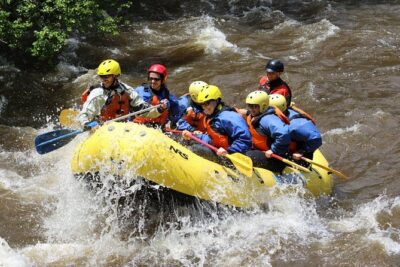
Rafting in Nepal: Trishuli, Bhotekoshi & Other River Rafting
Read our review →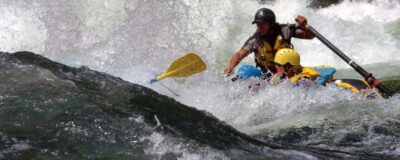
Beginner-Friendly Rafting Adventure on the Trishuli River
Read our review →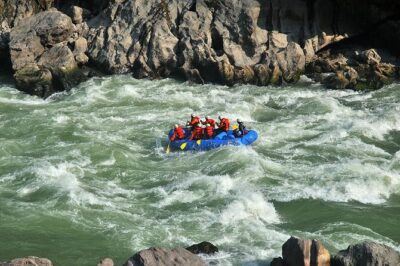
Trishuli River Rafting Day Trip From Kathmandu by Private Car
Read our review →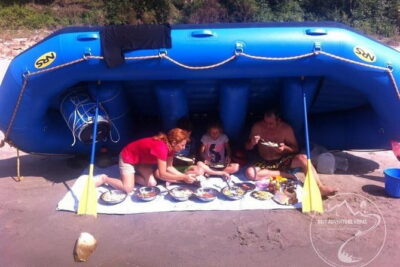
The lists this trip appears in